Why am I so political?
Why am I so political you ask?
Why do I even bother?
Where did my love for the other
arise?
In 1492 two cosmos collided and out
of the ashes, a people were born. But not without hurt and not without pain,
and still to this day we all feel the pain.
If only I could believe the stories
in books, “a happy encounter, a forecievalbe truth, the meeting of people, we
are the living proof.” They tried to convince me it was for the best, the
collateral damage they said was needed at best.
My indigenous ancestors were colonized in
mind, body and soul. They were robbed of their identity as kings, queens, astronomers,
healers, and now had no control.
They were told that their knowledge
was no longer needed nor wanted and that the pope had to confirm that they had
a soul.
They were taught that the thousands
of years of knowledge that they held in their minds and in their hearts were
invalid in this new world order. That knowledge had already been discovered by
someone in Europe, and to prove it their temples were burned or replaced with a
church.
They were told that if they prayed to
a cross they would live forever, and if they chose not to, they would burn at
the stake.
Some chose to resist and some chose
to submit and in the end we are still fighting this battle within.
The ones who submitted took the cross
in the daytime, yet prayed to their Gods that the sunlight would not come.
They dreaded the days, working and
toiling in the sun. Looking for riches for the Spaniards and seeing their
children run. Running away, being massacred by the millions. Homicide and
genocide is what it was, yet no one mentions those words and calls it the black
legend. I can assure you it was no legend, it was not a tale. The hurt is still
seen in the eyes of the people. Exploited to no end and still barely surviving
for the colonizers to say, “It was for your own good, we saved you you know, before
us you were savages and you knew no true God.”
Yet the colonizers were ignorant to
the many facts prior to their arrival. They didn’t care nor want to know, they
were in denial.
The people had schools, universities,
were proficient astronomers, thus the pyramids were constructed to exact
measurements of the cosmos. They had already been using the zero, they had
majestic cities, they knew of plants that healed and birds that sang. They knew
of the power of stories, and the balance between humans and nature.
They were told that their color was
proof of their sin, but if they repented, in heaven they would live. There were
some like Hautey who while being burned at the stake, he took a deep breath and
confidently he said, If heaven is the place where the Spaniards will live, I
will not go to heaven, his will did not give. So his memory lives on. He might
be a martyr, as were thousands of others, who continue to be victims of this
new world order.
Women were taught how to have sex and
where to have it. They were taught to be ashamed of their bodies and that if
they were raped by the white man it must have been their fault. So they stayed
silent, passive, they held in the hurt and the pain. But it had to be
transferred someplace, and the place was the body and mind of their daughters. The
daughters that are my grandmothers, aunts and mothers.
They were robbed on their land, of
their gods, of their mind. They were kept in captivity and they now belonged to
the parcel of land. The land that their ancestors had kept for so long. The
Pacha Mama that was now being raped and wronged.
And so to this day you may ask, why
the bother? It was so long ago, why continue the pain?
My answer is simple it is not over.
The hurt continues and the colonization is still felt.
My generation has the memory and the
hurt of the ages. We know of the past and we toil in the present.
My other ancestors were taken as
slaves, dragged along the ocean and made to submit to work, sex, orders and the
white man. They were brought to this new land, made to work for nothing. Told
again that their color was why God had intended them to suffer.
And my other ancestors came from all
over. And I am not ashamed of all that I am. Like Octavio Paz put it, we are
the cosmic race, and we will move forward.
It would be so easy to detach myself from who
I am and where I came from and be, well, not so political, but that would be
cultural and ethical suicide. That would mean forgetting all the pain that runs
through my veins. That would mean accepting the claims the white man has made.
Injusticias
Atrocidades
And it is still not the end.

A place to express misconceptions about a variety of subjects including blindness, immigration, social justice and the like. Join me!
Thursday, April 12, 2012

Wednesday, February 1, 2012
Teacher Leader Seminar Misconceptions
Teacher Leader Seminar 2012
(image 1: Leesa Wallace using the blackboard and showing off her work)


(image 2 a session held about Structured discovery learning with children)
 (image 3: Deja Powell teaching a dance routine to teachers in blindfold. Yes blind students can learn to dance!)
This past weekend I participated in the NFB's Teacher Leader Seminar. It was a great energetic weekend that brought together Teachers of blind children from all over the country. There was so much knowledge that was shared. Below are some of the misconceptions that were cleared up and brought to our attention. They are...
1. "A misconception is that students with lower cognitive ability cannot learn contractions" Casey Robertson. Contractions are kind of like shortened words in text. They are used in braille so ensure faster reading. Many teachers do not teach children with other abilities. They think that braille will be too difficult and that is absolutely not true. In one of the seminars Casey showed us firsthand what she has done to work with these exceptional children. She is making a huge difference in her state of Mississippi and in the field.
2. A student that has to read print at 75 point font of anything near that should do it. FALSE. If a child has to read print so close and strains his or her sight and back, then they should be reading braille. There is no reason why a child should have to work that hard to read. Unfortunately, many teachers of the blind do just that and blow up materials for their students. If a child is receiving services then braille is the law, it has to be proven that they do not need it before it can be denied.
3. "A misconception is that blind children cannot get good graphics" Ann Cunningham. Many teachers and parents struggle to provide graphics to blind children. However, Ann Cunningham proved that graphics can be accessible and provided us with a great useful tool. The tool she provided was called a blackboard. Any image can be placed over its surface and then traced with a pen. The blackboard raises the print so that it becomes tactile. This tool can be used for charts, graphs and anything else. They can be purchased at sensationalblackboards.com
4. Blind children's canes get in the way in the classroom and be harmful to other students so should be left in a corner. FALSE. A student needs to have his or her cane at all times. If a child learns the appropriate way to put a cane away and place it on the floor it will not cause problems. If a blind child uses his or her cane to hit others and causes problems, they need to be disciplined just like any sighted child would. If a sighted child using a pencil to harm someone the pencil is not taken away. This is what should happen with a blind child, they should be disciplined but their cane should remain with them at all times.
5. Braille is really hard to learn. FALSE. This statement was touched upon many times at the seminar. When teacher of the blind believe that braille is hard, guess what ... it will be! The teacher's attitudes about braille will be reinforced onto the student. We as teachers need to know that braille is not hard to learn for students. In fact, they pick it up quite easily. If they have braille instruction every day they will be proficient, and it is our job to help them get there.
6. Low vision students don't need braille if they can read large print. FALSE. This was also touched upon many times at the seminar. Many teachers of the blind do not teach braille to low vision students. This may seem appropriate at the time, but what happens when a student needs to read harder materials and needs to be on grade level. Low vision students are many times denied the level of literacy that other students are for the simple fact that braille is not offered to them. If a blind child is at normal intelligence, then they should be reading at grade level. However, if they are at above average intelligence, they need to be reading at a higher level. Many times this does not happen because blind students are not expected to compete at an equal basis with their sighted peers.
Overall the Teacher Leader Seminar was a huge success I learned so much from all of the sessions and from the other teachers who were there to participate. I think many misconceptions about blind children and braille were broken, and these teachers will be able to take what they learned and hold high expectations for their students. Because BRAILLE IS BEUTIFUL!
Keep up the good work!
1. "A misconception is that students with lower cognitive ability cannot learn contractions" Casey Robertson. Contractions are kind of like shortened words in text. They are used in braille so ensure faster reading. Many teachers do not teach children with other abilities. They think that braille will be too difficult and that is absolutely not true. In one of the seminars Casey showed us firsthand what she has done to work with these exceptional children. She is making a huge difference in her state of Mississippi and in the field.
2. A student that has to read print at 75 point font of anything near that should do it. FALSE. If a child has to read print so close and strains his or her sight and back, then they should be reading braille. There is no reason why a child should have to work that hard to read. Unfortunately, many teachers of the blind do just that and blow up materials for their students. If a child is receiving services then braille is the law, it has to be proven that they do not need it before it can be denied.
3. "A misconception is that blind children cannot get good graphics" Ann Cunningham. Many teachers and parents struggle to provide graphics to blind children. However, Ann Cunningham proved that graphics can be accessible and provided us with a great useful tool. The tool she provided was called a blackboard. Any image can be placed over its surface and then traced with a pen. The blackboard raises the print so that it becomes tactile. This tool can be used for charts, graphs and anything else. They can be purchased at sensationalblackboards.com
4. Blind children's canes get in the way in the classroom and be harmful to other students so should be left in a corner. FALSE. A student needs to have his or her cane at all times. If a child learns the appropriate way to put a cane away and place it on the floor it will not cause problems. If a blind child uses his or her cane to hit others and causes problems, they need to be disciplined just like any sighted child would. If a sighted child using a pencil to harm someone the pencil is not taken away. This is what should happen with a blind child, they should be disciplined but their cane should remain with them at all times.
5. Braille is really hard to learn. FALSE. This statement was touched upon many times at the seminar. When teacher of the blind believe that braille is hard, guess what ... it will be! The teacher's attitudes about braille will be reinforced onto the student. We as teachers need to know that braille is not hard to learn for students. In fact, they pick it up quite easily. If they have braille instruction every day they will be proficient, and it is our job to help them get there.
6. Low vision students don't need braille if they can read large print. FALSE. This was also touched upon many times at the seminar. Many teachers of the blind do not teach braille to low vision students. This may seem appropriate at the time, but what happens when a student needs to read harder materials and needs to be on grade level. Low vision students are many times denied the level of literacy that other students are for the simple fact that braille is not offered to them. If a blind child is at normal intelligence, then they should be reading at grade level. However, if they are at above average intelligence, they need to be reading at a higher level. Many times this does not happen because blind students are not expected to compete at an equal basis with their sighted peers.
Overall the Teacher Leader Seminar was a huge success I learned so much from all of the sessions and from the other teachers who were there to participate. I think many misconceptions about blind children and braille were broken, and these teachers will be able to take what they learned and hold high expectations for their students. Because BRAILLE IS BEUTIFUL!
Keep up the good work!
--Miss Conceptions
Friday, January 27, 2012
Miss Conceptions about blind children

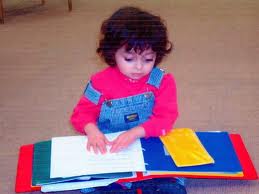 I am headed to Baltimore for a conference about blind children. It is focused on Teachers of blind children. It is put on by the National Federation of the blind and I am super excited! This reminded me about misconceptions that teachers and society in general have about blindness.
 Let’s start by stating that all parents want what is best for their child, no matter the situation that they mind find themselves in. When a parent is blessed with raising a blind child it can seem overwhelming at first. They have no idea what to do and they look for professionals to help them. The problem is that professionals may not always know what is best (and most of the time in the case of blind children they do not do what is best).
Most people that I speak to are amazed that most blind children are not getting the basic education that they should be getting in school. Most children are not taught braille and are set to much lower expectations then their sighted peers. TVI's or Teachers of the Visually Impaired are the professionals who are supposed to be teaching braille and ensuring that blind children are getting the education that they need. However, how can this be done when the TVI has misconceptions about blindness? So let’s clear some of those up
Misconceptions about blind children...
1. Blind children are fragile and they need to be overprotected: FALSE. It is vital that a blind child get the same experiences that other children get. If a child does not get normal experiences this will affect the rest of their development (cognitive, physical etc.)
2. Braille is so much harder than print and so it takes longer for a blind child to learn: FALSE. When children are in the early years and are ready to read they will read. All they need is encouragement and a good teacher. Braille is not harder to learn then print. In fact it has a pattern and a braille reader can read at the same pace as a print reader.
3. Blind children should not participate in sports for their safety. FALSE. Blind children should be encouraged to participate in physical activities just like any other child. Sports can be adapted for a blind child to fully participate.
4. Blind children should rely on their parents for traveling. FALSE. Children should be encouraged to explore on their own. This is when the use of a cane comes in. If they use a cane, they will be able to do things on their own. Age appropriate is important and what you would expect a sighted child to do at any age, you should also expect a blind child to do.
5. A child with low vision should read large print. FALSE. A child who is legally blind and is reading large print will have many challenges as an adult if they do not read braille. In elementary school large print may seem appropriate, but as the years go by, books get longer and print gets smaller. A child will not be able to fully participate on an equal level in high school, college and in the employment world. Listening to books on tape does not cut it as spelling and writing are not incorporated. In fact students with low vision are less likely to be employed than those that are totally blind due to the fact that they do not use braille.
6. A blind child is different from a sighted child and should receive different treatment. FALSE. The best thing that you can do for a blind child is to treat them equally to sighted children. They should be expected to do chores, participate in school equally, have a social life and have normal experiences.
How can these things be accomplished? By having high expectations for blind children and meeting blind role models who are confident and live a normal life.
It is really frustrating to meet a 21 year old blind person who has never done anything independently in their life. They do not have normal experiences and they do not know how to make basic decisions on their own. Our children are our future and blind children are no different. A blind child should have the same opportunities as any other child, and have the same high expectations just like any other child.
Most people that I speak to are amazed that most blind children are not getting the basic education that they should be getting in school. Most children are not taught braille and are set to much lower expectations then their sighted peers. TVI's or Teachers of the Visually Impaired are the professionals who are supposed to be teaching braille and ensuring that blind children are getting the education that they need. However, how can this be done when the TVI has misconceptions about blindness? So let’s clear some of those up
Misconceptions about blind children...
1. Blind children are fragile and they need to be overprotected: FALSE. It is vital that a blind child get the same experiences that other children get. If a child does not get normal experiences this will affect the rest of their development (cognitive, physical etc.)
2. Braille is so much harder than print and so it takes longer for a blind child to learn: FALSE. When children are in the early years and are ready to read they will read. All they need is encouragement and a good teacher. Braille is not harder to learn then print. In fact it has a pattern and a braille reader can read at the same pace as a print reader.
3. Blind children should not participate in sports for their safety. FALSE. Blind children should be encouraged to participate in physical activities just like any other child. Sports can be adapted for a blind child to fully participate.
4. Blind children should rely on their parents for traveling. FALSE. Children should be encouraged to explore on their own. This is when the use of a cane comes in. If they use a cane, they will be able to do things on their own. Age appropriate is important and what you would expect a sighted child to do at any age, you should also expect a blind child to do.
5. A child with low vision should read large print. FALSE. A child who is legally blind and is reading large print will have many challenges as an adult if they do not read braille. In elementary school large print may seem appropriate, but as the years go by, books get longer and print gets smaller. A child will not be able to fully participate on an equal level in high school, college and in the employment world. Listening to books on tape does not cut it as spelling and writing are not incorporated. In fact students with low vision are less likely to be employed than those that are totally blind due to the fact that they do not use braille.
6. A blind child is different from a sighted child and should receive different treatment. FALSE. The best thing that you can do for a blind child is to treat them equally to sighted children. They should be expected to do chores, participate in school equally, have a social life and have normal experiences.
How can these things be accomplished? By having high expectations for blind children and meeting blind role models who are confident and live a normal life.
It is really frustrating to meet a 21 year old blind person who has never done anything independently in their life. They do not have normal experiences and they do not know how to make basic decisions on their own. Our children are our future and blind children are no different. A blind child should have the same opportunities as any other child, and have the same high expectations just like any other child.
(Notice the two pictures. In one a child is reading braille with a normal posture. Notice the other picture where a child has to hold up the page too close to their face to rread print and this causes head aches, back pain and later problems)
--Miss Conception
--Miss Conception
Tuesday, January 17, 2012
New Year and new ideas
Welcome to my blog! I am finally starting a blog that does not require me to be in a certain location to post. Also I think the title "Miss Conception's" is a great Segway into so many issues. My official name is Maria de la Concepcion, so it just seems logical to post about me and about the things that go on in my head. I also want to post about misconceptions that I believe that society has in general about various issues including blindness, immigration and equality in this country. Join me in my ponderings and feel free to comment on my posts!
Subscribe to:
Posts (Atom)